Which Class Are You Travelling?
Updated version of George Cutting’s original booklet, which has been a rich blessing to thousands over the decades.
This is not a regular post. It is a booklet that will take 20 minutes to read. But you will not regret taking a few minutes to read it.
As you travel through time toward eternity, I would like to ask: “Which class are you travelling in?” There are only three:
First-class travellers are eternally saved from their sins and know it. Second-class travellers are not sure of their salvation but want to be sure. Third-class travellers are unsaved and don’t care about their future.
A man came running through the airport just in time to catch his flight. Gasping for breath, he took his seat on the plane as the engines started. “You just made it,” said the passenger seated next to him. “Yes,” he replied, “the next flight is four hours from now. It was worth the run to save four hours.”
I wonder if he’s as concerned about eternity as he is about those four hours!
Intelligent men and women all over the world today are carefully looking after their interests in this life, but are blind to eternity. Despite God’s love for people, His hatred of sin, the brevity of life and the terror of judgment after death, men and women hurry on as if there were no God, no sin, no death, no judgment, no heaven and no hell. If you are like this, I hope this online booklet will open your eyes to the danger of your position. Don’t travel through life third class!

But you may say, “It’s not that I don’t care about the welfare of my soul. I’m just not sure. I guess you’d call me a second-class passenger, because I’m uncertain.”
Both indifference and uncertainty result from unbelief. Indifference comes from unbelief about sin and how it condemns man. Uncertainty comes from unbelief about God’s plan to save men and women. The more you are concerned about your eternal future, the more unhappy you will be until you know for certain that you are eternally saved.
For what will it profit a man if he gains the whole world, and loses his own soul? Mark 8:36
Suppose you are driving far from home. You are low on gas, so you stop a passerby to ask for directions to the nearest gas station. He says, “I think a left turn will get you there.” Then he says, “I hope that’s right.” Would his directions satisfy you?
Unless you have certainty about it, every mile down that road will increase your anxiety. People can really get sick worrying about the eternal safety of their souls!
One poet expresses the value of the human soul this way:
To lose your wealth is much.
To lose your health is more.
To lose your soul is such a loss
That no one can restore.
I want to show you three things from the Bible: the way of salvation (Acts 16:17), the knowledge of salvation (Luke 1:77) and the joy of salvation (Psalm 51:12). A person might know the way of salvation without knowing for sure that they themselves are saved. Also, they might know for sure that they are saved without having the joy that should accompany that knowledge.
Safety — The Way Of Salvation
In the Old Testament, God gave laws to the Israelites that often used everyday life to teach deeper spiritual truths. One of those laws said:
Every firstborn of a donkey you shall redeem with a lamb; and if you will not redeem it, then you shall break its neck. And all the firstborn of man among your sons you shall redeem. Exodus 13:13
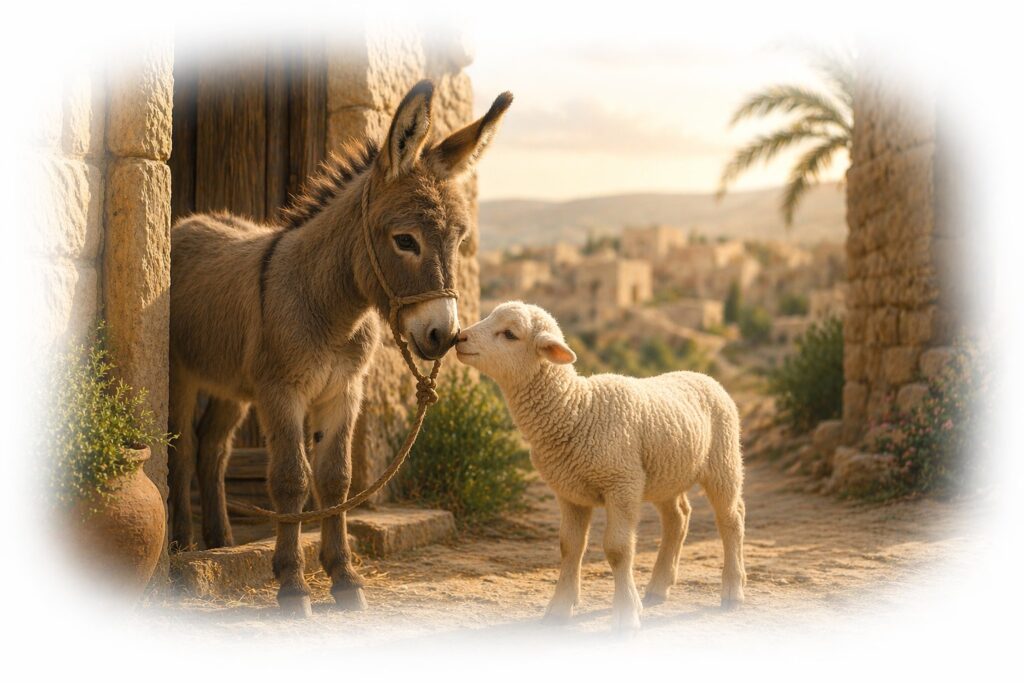
Travel back in time with me about 3000 years. A priest is talking to a poor Israelite about the little donkey standing beside them.
The poor man says, “Can’t you make a merciful exception for me just this once? This is my firstborn donkey, and although I know what God’s law says, can’t its life be spared? I can’t afford to lose this little animal.”
The priest says, “God’s law is very plain. Unless the donkey is redeemed by the death of a lamb, its neck must be broken.”
“But I don’t have a lamb.”
“Then go buy one. The lamb or the donkey must die.”
The Israelite sadly replies, “Then it’s hopeless because I can’t afford a lamb.”
Another man who overhears the discussion approaches the poor Israelite and says, “Cheer up! I have a little lamb which is without spot or blemish. Although it means much to me, I will give it to you.”
Away he goes, and soon both donkey and lamb are standing side-by-side. Then the lamb is placed on the altar, its blood is shed, and it is consumed by the fire.
The priest turns to the poor man and says, “You can take your donkey home. Its neck will not be broken because the lamb has died in its place. Your donkey can live and righteously go free, thanks to your friend.”
This little story gives us a picture of a sinner’s salvation.
God’s claim against sin demands a “broken neck” – a righteous judgment on you. The only alternative is the death of a Substitute approved by God.
No matter how hard you try, you cannot meet God’s requirement.
However, God Himself provided the Lamb in the Person of His beloved Son, Jesus Christ. John the Baptist referred to Him as —
…the Lamb of God who takes away the sin of the world. John 1:29
Jesus went to Calvary’s cross —
as a Lamb to the slaughter Isaiah 53:7
There He —
suffered once for sins, the Just for the unjust, that He might bring us to God. 1 Peter 3:18
He —
was delivered up because of our offences, and was raised because of our justification. Romans 4:25
God does not reduce His judgment against sin when He forgives the sinner. Read Romans 3:25–26.
Jesus had to pay the penalty in full.
How do you answer this question: “Do you believe on the Son of God?”
If you reply, “I have found Him to be the One I can safely trust as my Lord and Saviour,” then God credits you with the full value of Jesus’ sacrifice.
God’s love, the glory of His precious Son and the salvation of the sinner are all bound together. What a bundle of grace and glory!
God’s own Son does all the work, and you and I —poor, guilty sinners who believe in Him —get all the blessing.
Oh, magnify the LORD with me, and let us exalt His name together. Psalm 34:3
But you may ask, “Why don’t I have assurance of my salvation? One day I feel saved, but the next day I don’t. I am like a storm-tossed ship that has no place to drop anchor.”
That’s your mistake.
Did you ever hear of a captain trying to anchor his ship by dropping his anchor inside the ship?
The anchor must be hooked to something solid outside the ship.
You may understand that Christ’s death alone gives you safety, but you think that it is what you feel that makes you certain.
Certainty — The Assurance of Salvation
A person’s imagination sees salvation this way: “These happy feelings I have given to you who believe in the Name of the Son of God that you may hope that you have eternal life.”
Now open your Bible to 1 John 5:13 and compare a person’s imaginative thoughts with God’s Word, which says:
These things I have written to you who believe in the name of the Son of God, that you may know that you have eternal life. 1 John 5:13
The following illustration is based on a real historical event recorded in the Bible. Here is a little background to help you understand it today.
The Israelites were living as slaves in Egypt. God was about to rescue them. On the final night before their deliverance, God warned that judgment would pass through the land.
Every home faced the same danger.
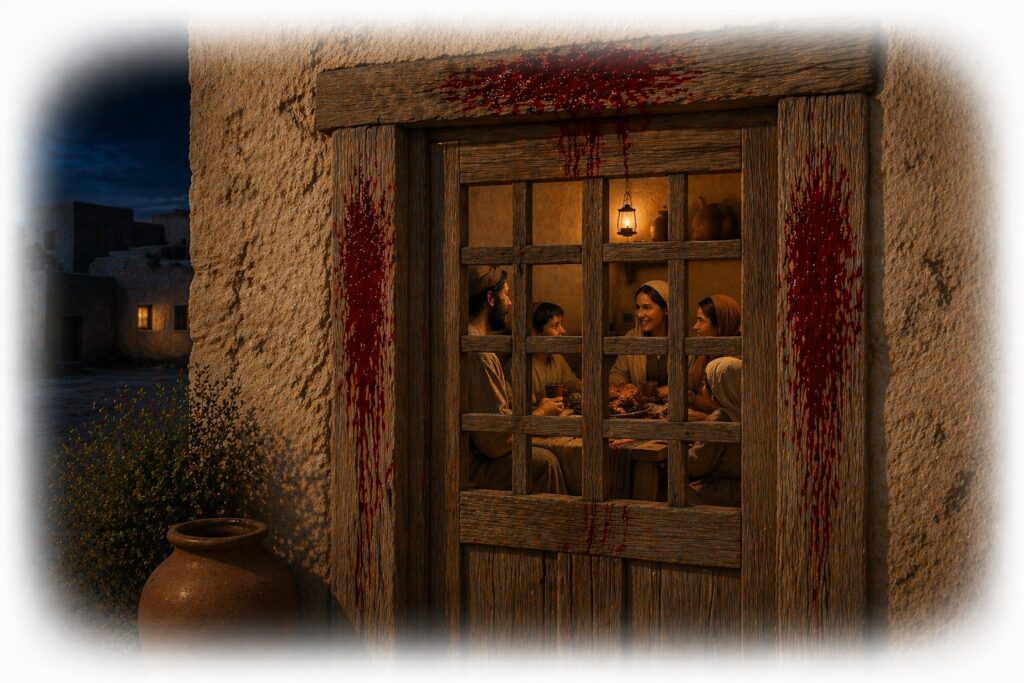
But God also provided a way of safety: each household was to take a lamb, kill it, and place its blood on the doorposts of their house. God promised that when He saw the blood, He would “pass over” that home, and those inside would be safe.
This event became known as Passover and is still celebrated today.
With that in mind, consider the following:
In Exodus 11–12, the Lord pronounced the judgment of death on the firstborn in every house in Egypt that did not have lamb’s blood placed on the doorposts.
Now, how did the firstborn sons of the Hebrew people know for sure that they were safe on that night of judgment?
Let’s visit two homes and hear what they say.
In the first house, everyone is trembling with fear. When we ask why they are so fearful, the firstborn son tells us that the angel of death is coming tonight, and he is not sure what’s going to happen.
“When the destroying angel has passed by our house, then I’ll know I’m safe, but until then I can’t be sure. Next door, they say they’re sure of their salvation, but we think that’s presumptuous. All I can do is hope for the best.”
We ask, “Hasn’t the God of Israel provided a way of safety for His people?”
The son replies, “Yes, and we did what God told us. The blood of a spotless lamb has been sprinkled on the doorposts, but we still are not sure of our safety.”
Now let’s go next door.
What a contrast!
Everyone’s happy. Their doorposts are painted, and they are enjoying the roasted lamb. Why all this joy on such a solemn night?
They answer, “We are waiting for Jehovah’s marching orders, and then we will say farewell to Egypt.”
“But, don’t you know that this is a night of judgment?”
“Sure, but our firstborn son is safe. The blood has been applied according to God’s orders.”
“But that also has been done next door,” we reply, “and they are unhappy because they are uncertain as to their safety.”
The firstborn answers firmly, “We have more than the blood. We have God’s Word about it. God said –
When I see the blood, I will pass over you. Exodus 12:13
God is satisfied with the blood outside, and we are satisfied with His Word inside. The sprinkled blood makes us safe while God’s Word makes us sure.”
Which of these two houses was safer?
The answer is that both were equally safe because their safety depended only on what God thought of the blood outside, not on the state of their feelings inside.
If you want to be sure of your blessings, don’t listen to the unstable testimony of your inward emotions.
Listen instead to the infallible Word of God:
Most assuredly, I say to you, he who believes in Me has everlasting life. John 6:47
Let me use another illustration.
A man asks to rent a house, but the owner doesn’t give him an answer.
One day, a neighbour says, “I’m sure you will get that house. Don’t you remember that the owner sent you a present last Christmas? He also waved to you the other day.”
These words fill the man with hope.
The next day, another neighbour says, “I don’t think you’re going to get that house. Someone else has also asked to rent it, and he is a good friend of the owner.”
The man’s bright hopes burst like soap bubbles. One day he has hope, and the next day he is full of doubts.
Then a letter comes from the owner.

His face changes from suspense to joy as he reads it.
He exclaims to his wife, “It’s settled now. The owner says the house is ours for as long as we want to rent it. Man’s opinions don’t matter now that we have the owner’s written word.”
Many people are in a similar condition, troubled by the opinions of men or by the feelings of their own hearts.
It is only when they finally receive the assurance of God’s Word that certainty takes the place of doubt.
When God speaks, there must be certainty, whether in pronouncing the damnation of the unbeliever or the salvation of the believer.
Forever, O LORD, Your word is settled in heaven. Psalm 119:89
His Word settles all.
Has He said, and will He not do? Or has He spoken and will He not make it good? Numbers 23:19
But you may ask, “How can I be sure that I have enough of the right kind of faith?”
It isn’t a question of the right kind or the amount of your faith, but of the trustworthiness of the Person in whom you have faith.
Do you have confidence in the right Person – the Son of God?
One person grabs hold of Christ with a drowning man’s grip, while another only touches the hem of His garment, but both are equally safe.
They both made the same discovery.
They can completely trust Christ and His Word, and confidently rest in the eternal effectiveness of His finished work.
Make sure your confidence is not based on your good works, your religious activities, your feelings or your moral training.
You may have the strongest faith in such things, and still eternally perish.
The feeblest faith in Christ eternally saves; the strongest faith in self is of no use.
“I do believe in Him,” said a sad-looking girl to me one day, “but I don’t like to say I’m saved for fear I might be lying.”
This girl’s father had gone to a livestock sale to buy some sheep and had not yet returned.
So I said, “Now, suppose when your dad comes home, you ask him how many sheep he bought, and he says ‘ten.’ Later, someone asks you how many sheep your father bought today, and you reply, ‘I don’t want to say because I might be lying.'”
With righteous anger, her mother, who was standing nearby, exclaimed, “But that would be making her father a liar!”
In like manner, this well-meaning girl was making Christ a liar by saying, “I believe in Him, but I don’t like to say I’m saved for fear I might be lying.”
Christ has said:
He who believes in Me has everlasting life. John 6:47
You might then ask, “How can I be sure that I really do believe? The more I look at my faith, the less I seem to have.”
Maybe you are looking in the wrong direction.
Your trying to believe only shows that you are on the wrong track.
Let me use another illustration.
One evening, a man who is a notorious liar tells you that a friend has just been killed in a car accident.
You are not likely to believe him, because you know him too well.
But then a neighbour tells you the same bad news.
This time you say, “Since you tell me, I believe it.”
I ask, “Why do you believe your neighbour and not the liar?”
You answer, “Because of who and what my neighbour is. He has never lied to me, and I know he never will.”
In the same way, I know I can believe the Gospel because of the One who brings me the news.
If we receive the witness of men, the witness of God is greater; for this is the witness of God which He has testified of His Son… he who does not believe God has made Him a liar, because he has not believed the testimony that God has given of His Son. 1 John 5:9–10

An anxious person once told a preacher, “I can’t believe.”
The preacher asked, “Who is it that you can’t believe?”
This question solved the problem.
He had been looking at faith as something that he had to feel within himself to be sure that he was fit for heaven.
But faith always looks outside to Christ and to His finished work and quietly listens to the testimony of a faithful God about both.
The outside looks bring inside peace.
When a person turns their face towards the sun, their shadow is behind them.
You can’t look at yourself and at a glorified Christ in heaven at the same time.
God’s Son wins your confidence: His finished work makes you eternally safe, and God’s Word gives you the certainty of salvation.
Even if you are saved, you may wonder why you so often lose the joy and comfort of your salvation and become as unhappy as you were before you were saved.
Enjoyment — The Joy Of Salvation
You are saved by Christ’s work, you are assured by God’s Word, and your joy is maintained by the Holy Spirit who indwells you.
But every saved person still has the old, sinful nature that he was born with. The Holy Spirit resists the old nature but is grieved by every thought, word or deed that springs from it.
When you walk “worthy of the Lord,” the Holy Spirit produces in you His blessed fruit:
love, joy, peace, longsuffering, kindness, goodness, faithfulness, gentleness, self-control. Galatians 5:22
However, when you walk in a worldly way, the Holy Spirit is grieved, and this fruit diminishes as your worldly ways increase.
While Christ’s work and your salvation stand firm together —because He cannot fail — your walk and your enjoyment stand or fall together because the one depends on the other.
The early disciples walked —
in the fear of the Lord and in the comfort of the Holy Spirit and they were multiplied. Acts 9:31
Again, it says,
the disciples were filled with joy and with the Holy Spirit. Acts 13:52
In other words, your spiritual joy will be in direct proportion to the spiritual character of your walk after you are saved.
Do you see your mistake?
You have been confusing enjoyment with safety.
When, through sin, you grieved the Holy Spirit and lost your joy, you thought your safety was also lost.
Your safety depends on Christ’s work for you, your assurance depends on God’s Word to you, and your enjoyment depends on not grieving the Holy Spirit in you.
When you grieve the Holy Spirit, your communion with the Father and the Son is interrupted.
Only when you judge yourself and confess your sins is your joy restored.
For example, just before your child did something wrong, you were playing together and enjoying each other’s company. She was in communion with you.
But now, all has changed.
Because of her disobedience, she sits alone in her room, the picture of misery.
You told her you would forgive her if she confessed her wrong, but her pride and self-will keep her from doing so.
Where is all the joy you shared when you played together?
It’s gone because your communion with her has been interrupted.
What has happened to the relationship between you and your daughter?
Has that gone too?
Of course not!
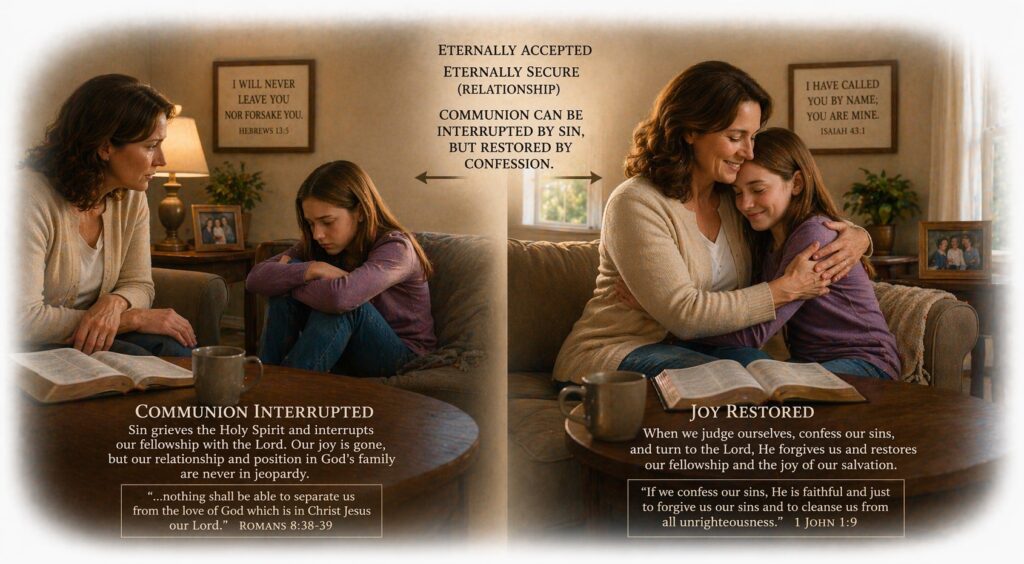
Her relationship depends on her birth; her communion depends on her behaviour.
Soon, she comes to you and asks you to forgive her. You see that she hates her disobedience as much as you do. You hug her, and her joy is restored because her communion with you is restored.
After King David committed adultery with Bathsheba and arranged to have Uriah killed in battle (2 Samuel 11–12), he did not ask God to “restore to me Your salvation,” but to
restore to me the joy of Your salvation. Psalm 51:12
Let’s look again at the example of the mother and daughter.
Your child is still in her room when your house catches fire. Would you leave her there?
I’m sure you would make sure she was safe, because your love relationship is one thing, while the joy of communion is quite another.
When a believer sins, communion is interrupted, and joy is lost until they return to the Father in self-judgment, confessing their sins.
The believer then can know for certain that they are forgiven since
If we confess our sins, He is faithful and just to forgive us our sins and to cleanse us from all unrighteousness. 1 John 1:9
Always remember that there is nothing as strong as the link of relationship and nothing so tender as the link of communion.
Nothing can break the first, but an impure thought, a wrong motive or a hurting word will break the second.
Never mix up your safety with your joy!
Are you troubled?
Turn in humble confession to God.
Examine yourself.
When you identify the thing which has robbed you of your joy, confess your sin to God and judge yourself for your carelessness that allowed the sin to enter in the first place.
Don’t think that God’s judgment of the believer’s sins is less severe than that of the unbeliever’s sins.
God does not have a double standard.
He only has one way of dealing with sin.
The believer’s sins were all paid for by Jesus Christ on the cross.
There, the question of judgment for the believer’s sin was forever settled.
Judgment fell on the Lord Jesus, the blessed Substitute who took the believer’s place:
…who Himself bore our sins in His own body on the tree. 1 Peter 2:24
On the other hand, the unbeliever, the Christ-rejecter, must forever bear the punishment for their own sins in hell because they have refused to accept Jesus Christ as their personal Substitute, their Saviour.
When a believer sins, the question of judgment cannot be raised against them because the Judge settled the judgment question on the cross.
However, the communion question is raised within the believer by the Holy Spirit every time He is grieved.

A man, looking at the moon’s reflection in a pool of still water, remarks to a friend how beautiful the moon is.
Suddenly, someone throws a stone into the pool, and the man exclaims, “The moon has fallen apart, and the pieces are everywhere!”
His friend replies, “Look up! The moon hasn’t changed at all. Only the pool has changed.”
How does this apply to the believer?
Your heart (the real you) is the pool.
When you don’t allow evil in your life, the Holy Spirit reveals to you the wonders of Christ for your comfort and joy.
But the moment sin enters, the Holy Spirit disturbs the pool (your heart) and your happy experiences are broken up.
You are restless and disturbed.
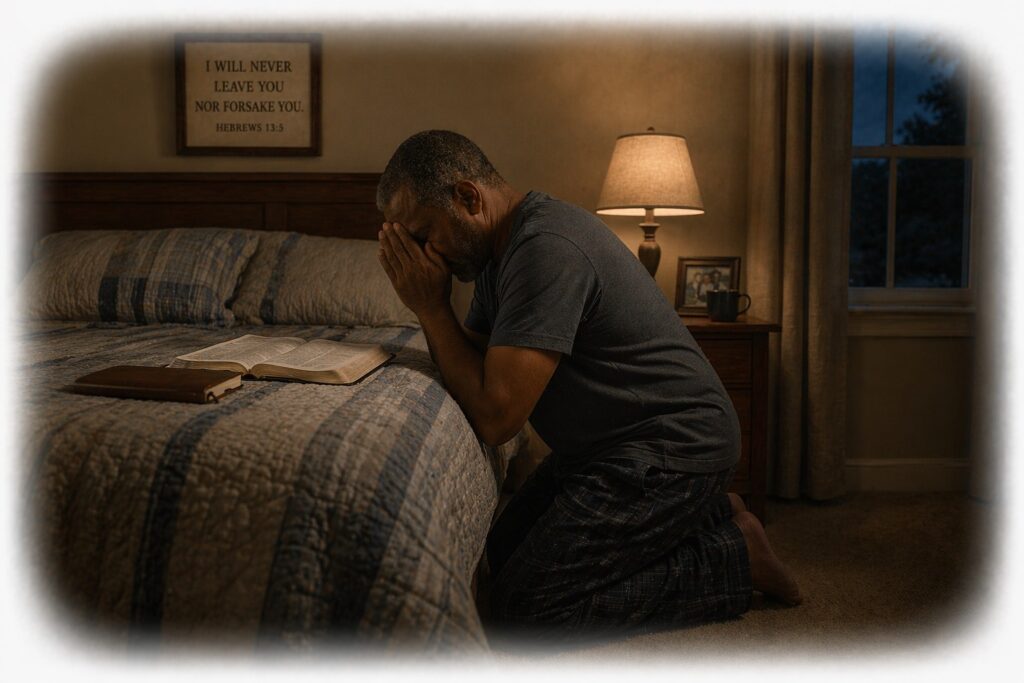
But as soon as you confess your sin, the calm joy of communion is restored.
While your heart is in a state of unrest because of sin, has Christ’s work changed?
Of course not!
Then the safety of your salvation hasn’t changed either.
Has God’s Word changed?
No!
Then the certainty of your salvation hasn’t changed either.
What, then, has changed?
The action of the Holy Spirit in you has changed.
Instead of filling your heart with the sense of Christ’s worthiness, He is grieved at having to turn aside from this delightful job to fill you with the sense of your sin.
He takes away your comfort and joy until you judge and resist the evil thing that has grieved Him.
When this is done, He restores your communion.
The Lord in His Word tells us,
Do not grieve the Holy Spirit of God, by whom you were sealed for the day of redemption. Ephesians 4:30
Dear reader, our Saviour and Lord will never change.
The Bible says,
Jesus Christ is the same yesterday, today, and forever. Hebrews 13:8

His finished work will never change either, for —
…whatever God does, it shall be forever. Nothing can be added to it, and nothing taken from it. Ecclesiastes 3:14
Also, the Word that He has spoken will never change.
The object of your trust, the foundation of your safety and the ground of your certainty are eternally unchangeable.
Let me ask you again, “Which class are you travelling in?“
Turn your heart to God and tell Him you want to travel through life in First Class, with safety, certainty and enjoyment!