
KJV John 9:1 And as Jesus passed by, he saw a man which was blind from his birth.”
NASB John 9:1 As He passed by, He saw a man blind from birth.”
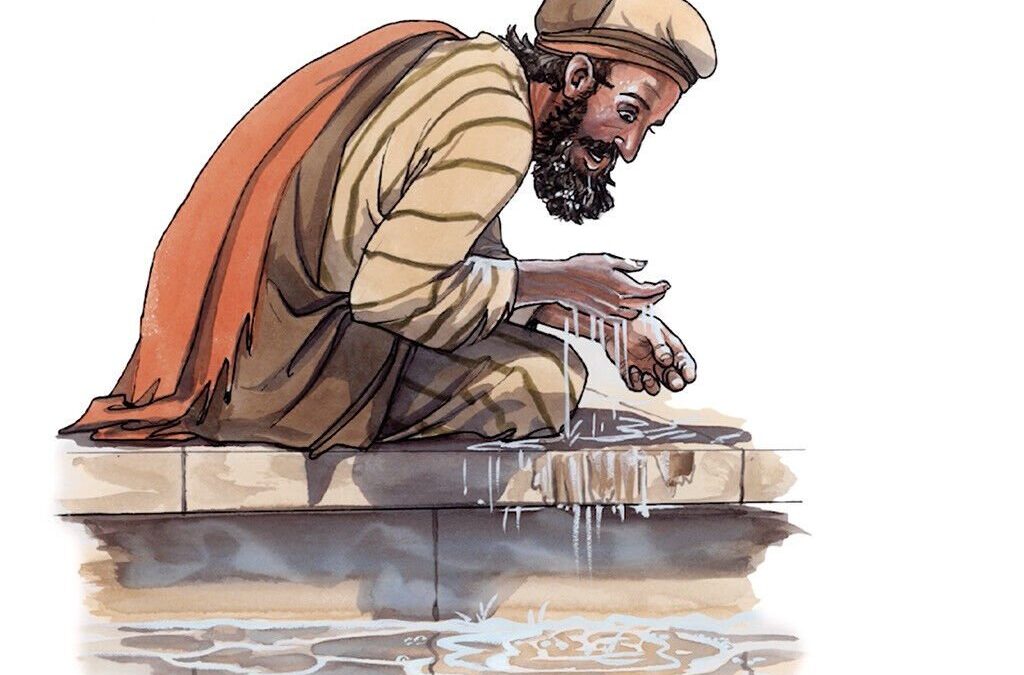
Imagine having just faced an irate crowd glaring at you with stones in their hands. The stones may have originally been intended for the woman at the beginning of chapter 8. But now they are poised to rain them down upon the Lord Jesus. As you make your exit, you see a man in need. What do you do? If you are Christ, you stop and meet his needs. The wording of John is arresting. “Jesus saw a man that was blind.” There was no possibility of the man seeing Christ. If help is to come, the Lord Jesus must be the source of it. In wondrous grace, He stops and, after silencing the retribution theology of His disciples, begins to deal with the blind man. Without a word from the man, the Lord makes clay with spittle and anoints His eyes. In the spittle of Christ, there was virtue; in that of men, there was only vileness.
What makes this miracle of significance is that it was unsolicited. Unlike blind Bartimaeus, who cried out to the Lord, this man says nothing and is healed by the Lord Jesus without requesting it. A similar miracle occurred back in chapter 5 with the man at the pool. In both instances, it was the Lord Who took the initiative. The miracle reveals the power of Christ – no one had ever healed a man blind from birth (v 32). But it also revealed the goodness and kindness of the Lord. There may be significance in that the man was sent to the pool – “sent” (v 7). The nation had refused, to this point, to believe in the One Who was “sent” by the Father.
John records seven signs or miracles in his Gospel. Of those seven, three were performed in Jerusalem or its environs. The man at the pool (ch 5), the man of our chapter, and the raising of Lazarus. Matthew 11:5 indicates that these were part of the credentials of the Messiah. Thus, Jesus was displaying His credentials before the leadership of the nation. It is of interest how they responded on all three occasions with unbelief.

In contrast to the nation, the man born blind becomes a living illustration of the truth the Lord Jesus had just preached. “If ye continue in My Word, then are you My disciples indeed” (8:31). Here was a man who began with only the knowledge that he had received his sight. But, refusing to be cowed by the intimidating badgering of the hierarchy, he grew in his appreciation of the Lord Jesus (v 38) and became free and a disciple indeed. His reception of physical sight led to spiritual vision. In contrast, the increasing blindness of the nation is portrayed for us throughout the chapter. The blind man moves from darkness to light, from want to worship.
Read the Latest Reports on Gospel Outreach Activities and Ideas Here
The chapter is also important because it marks the final mention of Moses in the Gospel of John. The leadership sided, or so they thought, with Moses (vv 28, 29). In reality, Moses had requested to see the glory of God. Here were men who failed to see the glory of God as displayed by the Son of God.
Consider
Collect all of the seven Sabbath Day miracles the Lord performed.
If you were to gather together all the miracles the Lord performed, would it be true that the reception of sight was the most common miracle He did?
Excellent meditation, thank you