
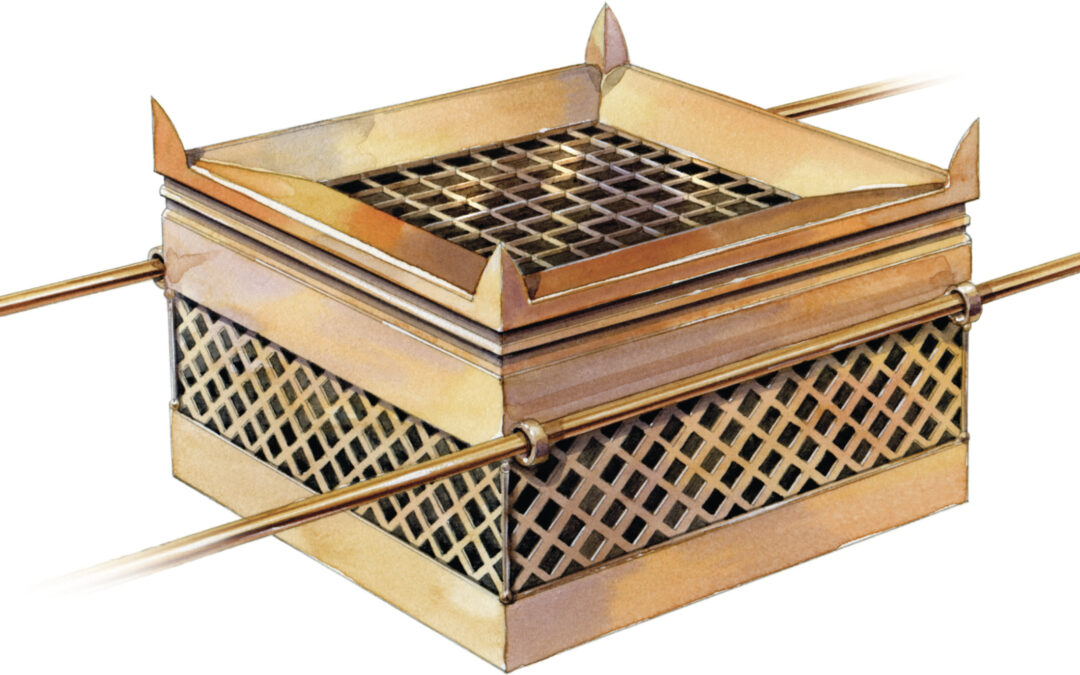
Exodus 27:4-5 KJV And thou shalt make for it a grate of network of brass; and upon the net shalt thou make four brazen rings in the four corners thereof. (5) And thou shalt put it under the compass of the altar beneath, that the net may be even to the midst of the altar.
Exodus 27:4-5 NASB “You shall make for it a grating of network of bronze, and on the net you shall make four bronze rings at its four corners. (5) “You shall put it beneath, under the ledge of the altar, so that the net will reach halfway up the altar.
The directions for the construction of the brazen altar are given to us in Exodus 27. Its size and prominent location are meant to impress us with the importance of the altar in the life of the nation. Five cubits square would mean at least 7 ½ feet in each dimension. Impressive and imposing, it declared to all who approached that sacrifice was fundamental and essential to the spiritual well-being of the Israelite.
Its height was 3 cubits, or approximately 5 ½ feet. Pardon a foray into history, but we are told by those who are supposed to be experts in this type of thing that the average height for a person in the second century before Christ would have been about 5 feet. Now factor in as well that the grate upon which the sacrifice was burnt would have been halfway down or at the 1 ½ cubit height.
In summary, we have an altar that is 5 ½ feet high, a grate halfway down, and men about 5 feet tall. Several things are suggestive when these numbers are considered.
The curious onlookers would have seen nothing but smoke ascending from the altar. They would not see the victim as the fire consumed it upon the grate. Even those who approached the altar with their sacrifices would not appreciate the “holocaust” that was raging on the grate. They would know that their sacrifice had been accepted, but they could not fathom what was occurring below.
It was only given to priestly men who served at the altar to have some concept of what was happening. As they would arrange the parts on the altar, to them alone was the reality of the fire, the burning, and the awfulness of the scene revealed. Priestly men saw what others could not see.
I must ask myself whether I can look down into the grate, or whether I can only see the smoke ascending? How near to Calvary can I approach? How much of His suffering for sin, from the hand of God do I adoringly appreciate?
A similar thought is suggested by the flaying of the burnt offering by the offerer. As he flayed the victim, he was going deeper and seeing what others did not see. Am I making any “inroads” into Christ? Am I appreciating not merely the outward sufferings of His body (which is not to be minimized), but do I understand anything of His inward feelings, heart, devotion, and consecration?
We should not be satisfied with merely seeing the smoke ascending from the sacrifice, nor with the external, as important as that is. May I draw near and look upon the grate, see the victim and all His “inward” parts exposed to the judgment of God. May I flay the sacrifice and see beneath the surface, worshiping for the inner beauties of Christ.
Excellent.
Thank you, brother, you have encouraged me to review and rethink the quality of my worship. Well put.