
Why Serious Bible Study Matters More Than Ever
Discerning Truth and Detecting Error
Perhaps you’ve heard this excuse—or even used it yourself. “I’m just not much of a reader.”
Yet it’s interesting that many who claim not to enjoy reading somehow manage to work through challenging textbooks, online course material, journal articles, lecture notes and technical manuals. How do they do it?
Whether the material is in print or on a screen, they discipline themselves to master difficult concepts because they know it is a requirement to achieve their academic or career goals. They believe their end goal is worth the effort. They highlight key points, make notes, review their material and prepare for examinations. It may not come naturally, but they do it – why? Because they know it matters.
Have you done any serious reading lately of a spiritual nature?
When was the last time you worked carefully through a book of the Bible? Have you marked your Bible, filled its margins with notes, summarized chapters, or traced a doctrine or a topic or a theme from Genesis to Revelation? God’s Word is not merely to be read—it is to be studied, meditated upon and obeyed.
Study (or be diligent) to present yourself approved to God as a workman who does not need to be ashamed, accurately handling the word of truth. 2 Timothy 2:15
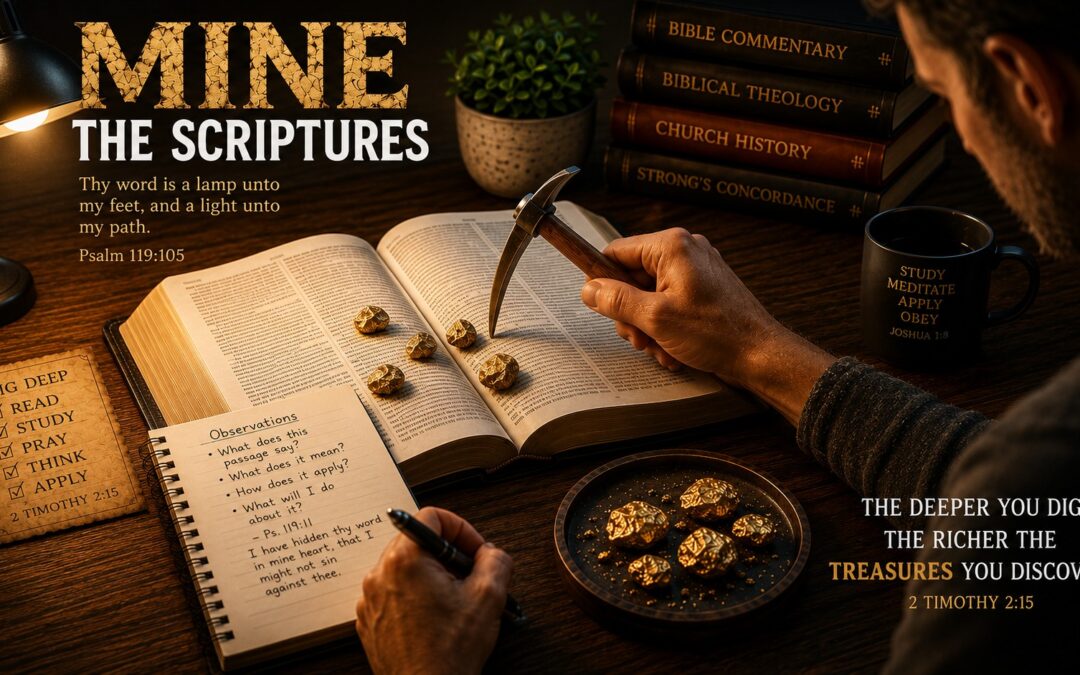
If your mind enjoys a challenge, try the Bible. It is the greatest book ever written—a treasury of truth that rewards careful study for a lifetime. The deeper you dig, the richer the discoveries become. The more diligently you mine God’s Word, the more spiritual gold you carry away.
We readily invest in technology, hobbies and subscriptions, but have you invested in a trustworthy Bible commentary, a sound doctrinal book or even a biography of a faithful servant of God? As you read and study, do you humbly ask for the Holy Spirit’s guidance and illumination of His Word?
Discerning Truth and Detecting Error
Never before have believers had such easy access to biblical teaching. Within minutes we can listen to sermons, podcasts, conference messages and Bible teaching from around the world. That is a tremendous blessing—but it also carries a very real danger.
With just a few clicks, we can attend churches of every type and hear messages of every stripe. We can “visit” churches online that we would never consider attending in person. The internet has no gift of discernment.
Algorithms cannot distinguish between sound doctrine and subtle error. They simply recommend more of whatever keeps us listening. A helpful message today may be followed by a persuasive but misleading one tomorrow. Popularity, production quality and millions of views are definitely no guarantee of biblical accuracy or faithfulness.
Like the noble Bereans, we must “search the Scriptures daily” (Acts 17:11) to see whether these things are so. Ensure your Bible is the final authority—not your favourite online pastor, podcast, YouTube channel or social media feed.
Even a single statement, concept or interpretation that activates a faint cause-for-concern signal should not be dismissed as isolated or insignificant. Compare it carefully with Scripture. Pray for discernment. Spiritual vigilance is not optional—it is a matter of spiritual survival.
Don’t hesitate to seek counsel from spiritually mature believers whose lives and doctrine you respect when you encounter unfamiliar or questionable teaching. Above all, remain faithfully committed to your local fellowship of believers, where godly overseers shepherd the flock, teach the Word and help protect believers from spiritual error.
The Apostle Paul was an elderly Christian when he wrote his 2nd letter to Timothy. One thing he was greatly missing in the Roman prison, as he awaited execution, was his books. It seems he was cold and shivering and feeling very lonely – missing the fellowship of believers. Hoping that Timothy would be able to visit him, he wrote these words:
When you come, bring the cloak I left in Troas with Carpus, as well as the scrolls, especially the parchments. 2 Timothy 4:13
Maybe he was only allowed one carry-on for his flight to Rome. One thing is certain: He was missing his library — his books and parchments. Even facing death, he still wanted to read, study and think on the things of God.

Dear child of God, don’t let quick devotionals, brief inspirational quotes or short online clips become the sum total of your spiritual diet. They have their place, but they were never intended to replace careful, personal study of the Scriptures.
God has blessed you with a mind capable of understanding His truth. Don’t devote all your mental energy (and time) to secular pursuits while remaining content with only a superficial “pamphlet” knowledge of God’s Word.
Read deeply and prayerfully. Think carefully. Compare Scripture with Scripture. Ask questions. Take notes. Pursue biblical truth with diligence.
Invest in trustworthy, doctrinally sound resources recommended by the overseers of your local assembly or by mature believers whose lives demonstrate faithfulness to Christ.
Choose a doctrine, a topic or a book of the Bible, and study it in depth. Develop a plan. Pray for the illumination of the Holy Spirit, and be willing to work hard. The treasures of Scripture are rarely discovered by those who merely skim the surface.
Open the Book of books. Dig deeply, and don’t stop at the surface. Those who mine God’s Word most diligently discover its richest treasures. Like Paul, learn to value “the books and the parchments.”
Coming in late August: the relaunching of our updated Lostsheepfinders website – a place to share personal evangelism ideas and approaches and reports on unique Christian outreach efforts.
This article is an excellent reminder, brother Peter.
This comment in particular, “ Algorithms cannot distinguish between sound doctrine and subtle error”, is a needed warning. Thankfully, we have both the Holy Spirit within and can consult with godly leaders amongst us to help us in the minefields that exist today.
Thank you for this valuable reminder! It is a much needed one. Could you give pointers to old & young, on How to dig deeply to get the most out of our studying and digging into the “Real Gold mine” of True Riches and Wealth….in God’s Own PRECIOUS WORD, the BIBLE….. Many many thanks!
Thank you for this valuable reminder! It is a much needed one. Could you give pointers to old & young, on How to dig deeply to get the most out of our studying and digging into the “Real Gold mine” of True Riches and Wealth….in God’s Own PRECIOUS WORD, the BIBLE….. Many many thanks!