
As important as 20/20 physical vision is in our daily lives, clear spiritual vision is even more critical as we make our way through life. The Bible speaks of spiritual blindness—of people living in darkness, yet unaware of how little they truly see. There is far more at stake than we might realize.
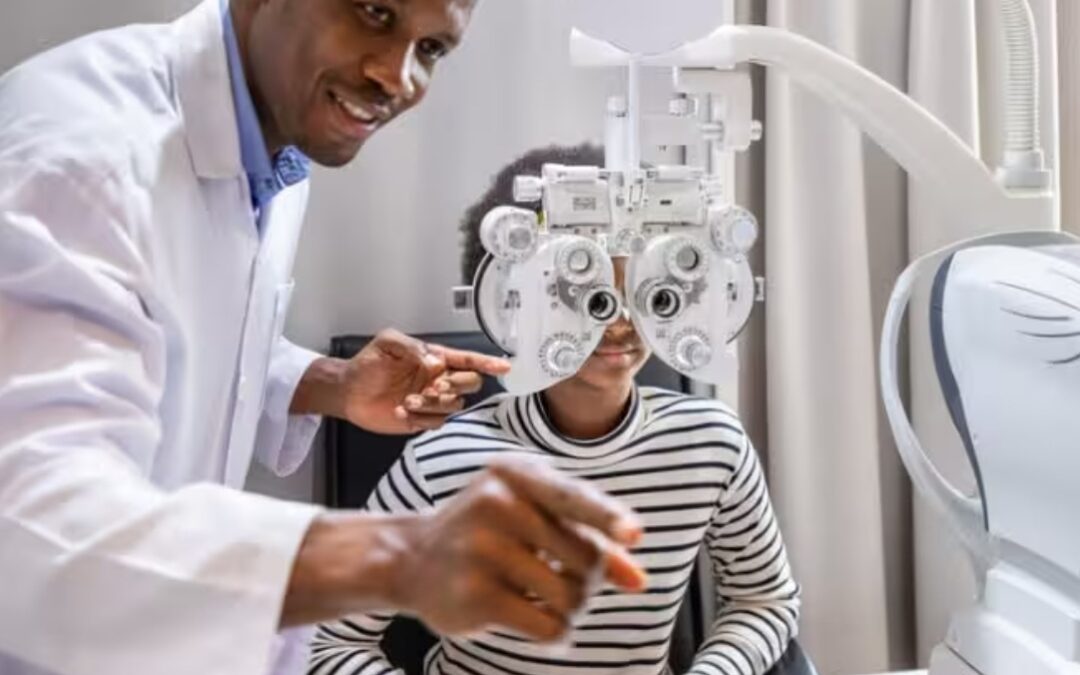
The modern eye clinic has an array of technologies and procedures to test and examine your vision—determining the prescription needed to bring things into proper focus. There are also tools to detect disease and assess the overall health of your eyes.
The typical conversation between you and the optometrist goes something like this:
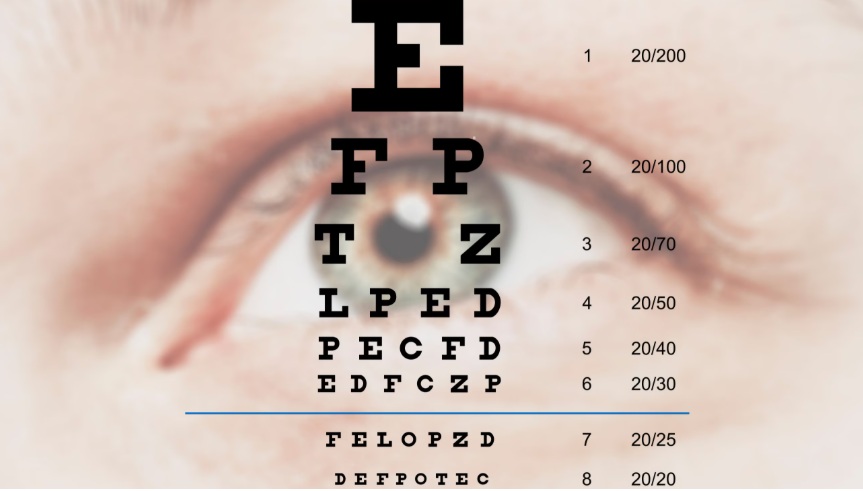
"Look at the letters… which is clearer, 1 or 2?"
"Uh… 2." (or "They look the same")
"How about now—1 or 2?"
"1… I think."
"Is this better, worse, or about the same?"
"A little better."
"Read the smallest line you can."
“E… F… P… T…” (or struggling a bit)
"Cover your left eye… now your right."
"Do they look sharper or just darker?"
"Darker, not really sharper."
"Which is better?"
"They honestly look the same."
Then comes the “aha” moment—when everything finally snaps into clarity. What a relief it is to see sharply and distinctly!
I still remember getting my first pair of glasses as an adult. For days, I was amazed at what I could suddenly see. I had assumed everyone saw the world the same way I did. But with those lenses, something changed. Looking out at our backyard fence, the pickets were no longer a blur blending together—I could see clearly through the spaces between them, even into the field beyond.
That’s physical vision.
But what about spiritual vision?
Do We All See the Same Way?
How clearly do you see spiritually?
Is everyone simply doing the best they can—living with a kind of blurred vision, where nothing is sharply defined, and certainty always seems just out of reach?
Some feel like they are groping along in dim light, wondering if they’re missing something. Others chase the latest spiritual ideas or influencers, hoping for clarity. Still others cling to long-held traditions, trusting that things will eventually come into focus.
But what if the problem isn’t just blurred vision?
What if it is something deeper?
What Does the Bible Say?
The Bible does not flatter our natural ability to see spiritually. It tells us that the issue is not merely that we are slightly out of focus—but that we are in darkness.
The Lord Jesus said:
“I am the light of the world. Whoever follows me will not walk in darkness, but will have the light of life.” (John 8:12)
That is a remarkable claim.
It means the problem is not simply confusion—it is darkness. And the solution is not self-improvement—it is light.
This is why the Bible is so unique. It is not just a book of spiritual thoughts or traditions. It is the perfect diagnostic instrument, revealing both our true condition and the only remedy.
Eyes That Need to Be Opened
The Bible often uses the language of sight to describe spiritual reality.
When the Apostle Paul gave his testimony before King Agrippa in the Acts of the Apostles, he explained that the Lord had sent him with this purpose:
“…to open their eyes, so that they may turn from darkness to light and from the power of Satan to God, that they may receive forgiveness of sins…” (Acts 26:18)
This is not a description of someone who simply needs a stronger lens. It is the condition of someone whose eyes must be opened.
And notice the result: forgiveness of sins. Spiritual sight is not just about seeing more clearly—it is about seeing truly:
- seeing our condition before God
- seeing who Jesus Christ really is
- seeing why His death and resurrection matter
The Eyes of the Heart
This is why the Apostle Paul also prayed in the Epistle to the Ephesians:
“that the eyes of your heart may be enlightened so that you may know…” (Ephesians 1:18)
That expression—“the eyes of your heart”—is deeply instructive.
It reminds us that true spiritual understanding is not merely a matter of intellect. A person may be highly intelligent and still remain in darkness. What is needed is a heart that is open, honest, and willing to receive the light.
Just as no one can force their eyes to see clearly without the proper lens, no one can force spiritual clarity by effort alone. There must be a willingness to step into the light.

Where Do We Begin?
If the Bible is the instrument that diagnoses our condition, where should someone start?
A wonderful place is the Gospel of John. It is a clear, focused, and compelling account of the life of Jesus Christ, written with a specific purpose:
“that you might believe that Jesus is the Christ, the Son of God; and that believing you might have life through His name.” (John 20:31)
In this Gospel, you meet people with every kind of spiritual vision problem:
- the religious, yet confused
- the searching, yet unsatisfied
- the blind, who come to see
And in every case, the Lord Jesus brings clarity.

A Personal Question
In the exam room, you are asked: “Which is clearer, 1 or 2?” But spiritually, the question is far more serious.

Are you in darkness—or in light?
Are your eyes closed—or opened?
Are you seeing dimly—or clearly?
An Invitation to See
If your spiritual vision feels uncertain—if things seem blurred, or if you’ve simply assumed that everyone sees the same way you do—why not test it?
Take the Gospel of John and read it slowly, with an open and honest heart. Be willing to notice when your mind retreats into familiar assumptions—ideas you’ve long held without ever truly examining them.
Ask yourself:
- What does this say about who Jesus is?
- Why did He come?
- What does it reveal about me?
- What is He calling me to believe?
- What will He save me from—both now and in eternity?

You may find that, like putting on the right lenses for the first time, things begin to come into focus.
Don’t short-circuit that process by stopping too soon. Let God speak through His Word. Stay with it until things become clear in a way they never have before.
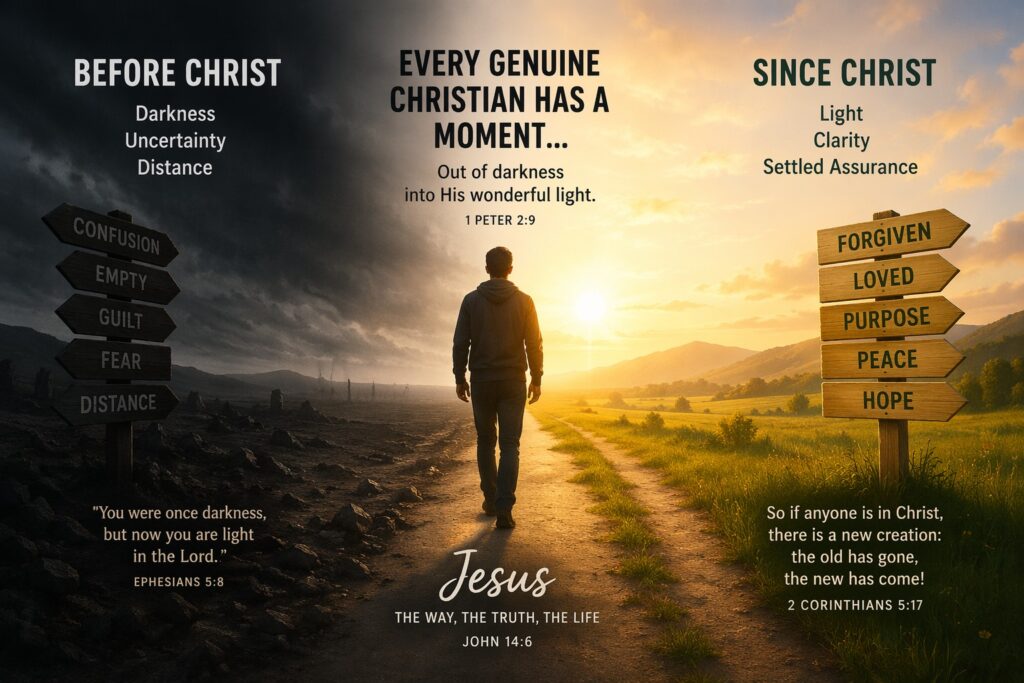
Every true Christian has a before and an after.
Before Christ—darkness, uncertainty, distance.
Since Christ—light, clarity, and a settled assurance.
In John 9, the man born blind did not understand everything about Jesus. But he could say this:
“One thing I do know: I was blind, and now I can see!” (John 9:25)
And when Jesus made Himself known to him, the response was immediate and personal:
“Lord, I believe.” And he worshiped Him. (John 9:38)
That is the difference.
Jesus Christ did not come merely to improve your vision—
He came to open your eyes.
Final Thought
The difference between blurred and clear spiritual vision is not found in trying harder to see — but in coming to the One who gives sight.
Will you come to Christ?
Jesus said:
“Come to me, all of you who are weary and burdened, and I will give you rest.” (Matthew 11:28)
“I have come as Light into the world, so that everyone who believes in Me will not remain in darkness.” (John 12:46)

Good morning from Grande Prairie AB
This is Excellent, thanks